I'm not one for short story collections. Of course, expertly done ones grab my attention, but for the most part I prefer following characters for longer arcs and full novels. It's just a strange preference that I've always had.
But the moment I saw What It Means When A Man Falls From The Sky in the bookstore, I knew I wanted to read it. The title grabbed my attention instantly and the cover was beautiful and the back cover was full of praise so high, I decided to take a leap.
And I'm so glad I did.
Every story in this collection is engrossing, developed, diverse, and spoke to me in various different ways.
Arimah's prose was stunning and clean, effortless in the one liners and wise descriptions she provided. Throughout the whole collection, there were clear themes that stayed consistent: race, class, gender, etc. and it was tasteful and done with the hand of an expert. She wrote with the passion of someone who had suffered, developed the stories with the cleanliness of premeditation and hard work, and she created a rich collection that forces you to look at the world around you and how you fit into it.
It's rare that I find an author who truly makes me wonder, who sends my mind into spirals and who makes their writing both an escape and a painfully real commentary on the world. Arimah does it with ease, allowing you to fall into these worlds but forcing you to take a step back at the same time and look at our very own.
The characters were rich and faceted, and Arimah's eye for detail was so keen that even side characters or people with mentions seem developed, real, and I think that adds the texture to this collection that makes it so compelling. From what the characters wore, to how they spoke, to what they noticed, it was all in line and all delivered cleanly.
I think of these stories, almost every single one engrossed me from the moment the story began to the moment if finished. I cannot say that about many other anthologies.
Occasionally, they fell short in their pacing or in their development. For example, the title story, What It Means When A Man Falls From The Sky, spanned a futuristic world that discussed both the human hunger for what we see as advancement as well as international relations. Arimah threw us right into the story which was engaging but at times a little bit confusing. It felt like it was reaching to show her versatility (which Arimah absolutely has) but there just wasn't room to fully develop this new world and the strange dynamics that we were dealing with in my opinion.
Overall, it's simply an impressive collection that has depth and skill that struck me blindsided.
Characters: 100%
Plot: 95%
Depth: 100%
Style: 100%
Intrigue: 85%
Overall Rating: A
Thursday, May 30, 2019

Sunday, May 19, 2019
Why I Reread
So just a few days ago, I reread the Harry Potter series for possibly the tenth time. Now, ten times is excessive, but as I was reading it, I was wondering what productive conversation I could create from the experience.
I know that some people are against rereading (my grandmother, for example, firmly stands by the fact that she has never reread a book in her life and never intends to), but what I realized as I reread Harry Potter is that the reason I reread books or series that I love so often is because I see it as having countless benefits. And in that vein, I realized I should write a blog post explaining why I reread.
First and foremost, I want to talk about this as a reader:
Rereading makes you a better reader. It is my firm opinion that when you reread a book, you pick up on ties and hints and linguistic things that you didn't the first time. Rereading things often will teach you as a reader about the moves that authors tend to make and will give you the intuition to pick up on hints and clues earlier and quicker in new novels that you're reading. I think this makes you a better reader and also a more active one.
Books are full of hints and clues and clever little details that we often miss or don't appreciate, and rereading can let us pick up on those in our second or third (or tenth) read through.
Second, I believe that rereading books can remind you why you read. If you're in a reading slump and nothing is pulling your attention, or you just feel like you're falling out of love with it for one reason or another, sometimes rereading can light that spark in you again. Returning to the pages of novels that you fell in love with from the first chapter can remind you how fantastic reading is, can remind you why you do it and why you love it so much. It can be a beautiful escape that creates a moment of rejuvenation. From personal experience, rereading series like Harry Potter or like Throne of Glass or Percy Jackson and novels like V.E. Schwab's or Rainbow Rowell's, even if I don't connect with them in the same ways now (not meaning I don't love them all the same or connect with them still, it's all just from a different perspective and for different reasons) have infallibly pulled me from reading slumps or hard times in life because they give me the same energy I used to feel when I first read them.
Third, rereading can be a beautiful release of nostalgia. If you're a reader, that means your life is narrated in part by the characters and the words of your favorite novels throughout the years. It means when you were really sad or really happy, when you were tired or overworked, when you were angry or apathetic, you read. Those pages of old novels you once read will hold those memories and can give you the feelings you had when you first read them.
Opening The Fault In Our Stars again can give you that same feeling it did years ago when you first read it, even if you find it cheesy or un-relatable now. And I think sometimes, just that alone is worth it.
If you're a writer, I still think rereading has benefits.
As I'm sure you know, reading can be a helpful exercise in writing. It can show us what works for us and what doesn't, allow us to look at what makes characters seem like real people and how an author stretches mystery and action to keep us turning pages.
Rereading can be even more elucidating on these things. When you're reading something for the first time, you're likely reading for enjoyment. You're figuring out the world, theorizing on the plot, forming opinions on the characters—you're not focused on the technicalities of an author's writing. But when you reread, you can focus more on craft and structure. You can analyze their point- of-view work, how their world building and dialogue and clever one-liners and foreboding chapter titles can all contribute to a book feeling fresh or clever. But you'll notice more of these, or even descriptions and unexpected metaphors, if you reread a novel already having a grip on the characters and the world building.
And this can even be a benefit of rereading bad books. I know, I know, nobody wants to dive back into the book that they found boring and vapid, contentless or too meandering, but at the end of the day, you have to know what mistakes that author made that didn't work for you to ensure you avoid those some errors in your own work.
Furthermore, beyond just learning from the rereading, you can also re-inspire yourself through rereading. Obviously plagiarism isn't cool, but all of us have books that make us want to tell our own stories, or see world building that is so detailed and honest that we can't help but itch to try our hand at it. And sometimes, when the writing well is dry and the books you're currently reading aren't filling it for you, rereading an old book that gave you that feeling can kickstart you back into writing and can remind you what you wanted from that work in progress.
All in all, I understand people's aversion to rereading, but I found such delight in it myself I thought I'd go into why I myself like to reread and the benefits I find it having.
Until next time!
I know that some people are against rereading (my grandmother, for example, firmly stands by the fact that she has never reread a book in her life and never intends to), but what I realized as I reread Harry Potter is that the reason I reread books or series that I love so often is because I see it as having countless benefits. And in that vein, I realized I should write a blog post explaining why I reread.
First and foremost, I want to talk about this as a reader:
Rereading makes you a better reader. It is my firm opinion that when you reread a book, you pick up on ties and hints and linguistic things that you didn't the first time. Rereading things often will teach you as a reader about the moves that authors tend to make and will give you the intuition to pick up on hints and clues earlier and quicker in new novels that you're reading. I think this makes you a better reader and also a more active one.
Books are full of hints and clues and clever little details that we often miss or don't appreciate, and rereading can let us pick up on those in our second or third (or tenth) read through.
Second, I believe that rereading books can remind you why you read. If you're in a reading slump and nothing is pulling your attention, or you just feel like you're falling out of love with it for one reason or another, sometimes rereading can light that spark in you again. Returning to the pages of novels that you fell in love with from the first chapter can remind you how fantastic reading is, can remind you why you do it and why you love it so much. It can be a beautiful escape that creates a moment of rejuvenation. From personal experience, rereading series like Harry Potter or like Throne of Glass or Percy Jackson and novels like V.E. Schwab's or Rainbow Rowell's, even if I don't connect with them in the same ways now (not meaning I don't love them all the same or connect with them still, it's all just from a different perspective and for different reasons) have infallibly pulled me from reading slumps or hard times in life because they give me the same energy I used to feel when I first read them.
Third, rereading can be a beautiful release of nostalgia. If you're a reader, that means your life is narrated in part by the characters and the words of your favorite novels throughout the years. It means when you were really sad or really happy, when you were tired or overworked, when you were angry or apathetic, you read. Those pages of old novels you once read will hold those memories and can give you the feelings you had when you first read them.
Opening The Fault In Our Stars again can give you that same feeling it did years ago when you first read it, even if you find it cheesy or un-relatable now. And I think sometimes, just that alone is worth it.
If you're a writer, I still think rereading has benefits.
As I'm sure you know, reading can be a helpful exercise in writing. It can show us what works for us and what doesn't, allow us to look at what makes characters seem like real people and how an author stretches mystery and action to keep us turning pages.
Rereading can be even more elucidating on these things. When you're reading something for the first time, you're likely reading for enjoyment. You're figuring out the world, theorizing on the plot, forming opinions on the characters—you're not focused on the technicalities of an author's writing. But when you reread, you can focus more on craft and structure. You can analyze their point- of-view work, how their world building and dialogue and clever one-liners and foreboding chapter titles can all contribute to a book feeling fresh or clever. But you'll notice more of these, or even descriptions and unexpected metaphors, if you reread a novel already having a grip on the characters and the world building.
And this can even be a benefit of rereading bad books. I know, I know, nobody wants to dive back into the book that they found boring and vapid, contentless or too meandering, but at the end of the day, you have to know what mistakes that author made that didn't work for you to ensure you avoid those some errors in your own work.
Furthermore, beyond just learning from the rereading, you can also re-inspire yourself through rereading. Obviously plagiarism isn't cool, but all of us have books that make us want to tell our own stories, or see world building that is so detailed and honest that we can't help but itch to try our hand at it. And sometimes, when the writing well is dry and the books you're currently reading aren't filling it for you, rereading an old book that gave you that feeling can kickstart you back into writing and can remind you what you wanted from that work in progress.
All in all, I understand people's aversion to rereading, but I found such delight in it myself I thought I'd go into why I myself like to reread and the benefits I find it having.
Until next time!
Tuesday, May 14, 2019
"Lethal White" | Robert Galbraith
 In terms of genres that I normally I read, crime and mystery is not one of them. However, when I heard about Galbraith (or should I say Rowling's) series so many years ago, I knew I needed to try them out, and I've been hooked since. The three years between Lethal White and Career of Evil felt
 long, and finally getting my hands on this book was a rush of euphoria.
I began it months ago, but only properly read it this week, hence the late review.
Coming right off the end of the novel, my main feeling is awe with how clever Rowling is at laying details and creating complex, realistic situations and characters that drives stories unlike many other authors can.
Lethal White begins picking up where we left off with Robin Ellacott and Matthew's wedding—something that we weren't sure would go on at the end of the previous novel—and Robin and Strike not speaking. The crime investigation of the novel is kickstarted by a young boy, Billy, stumbling into Cormoran Strike's office and telling him a story of a strangling he witnessed when he was a child.
The rest of the story chugs on shrouded in mystery and tangled in the web of the Chiswell family and the complicated politics of London's Olympic planning offices. This is one of the first glorious things of this story. Rowling does her research; we know this from the five years she spent planning the Harry Potter series, we know this from the way she walks through London and studies every pub and street and train she writes about in the Strike series, and it really shows here. The offices where they organized the Olympics felt so real, she had every detail down to a T, knew the crazy office dynamic she had to create, and she shaded her characters through that.
However, because of all of this planning, the first two or three hundred of this book was very character-focused. First of all, to begin with Robin and Matthew's wedding was necessary, but at times I felt unsatisfied because for a long time we didn't even have a real case that Strike and Robin were investigating. There was interpersonal drama and a new relationship with Strike where he lacked emotional vulnerability and the two of them ultimately struggle throughout the book with that. I might be alone in this, but while I know Robin and Matthew had to go through the struggles of their relationship and unfortunate hanging on even when we know it's doomed, and Strike needs to pretend to himself he's interested in other people, at times it felt gratuitous. At least half of this book was focused on relationships, and Rowling does it well enough where it does not drag, but I found myself frustrated at times for the seeming lack of focus on the crime. We know Robin and Strike are going to get together—it's so painfully inevitable—that so many moments just feel like hiccups that distract from the complicated and fascinating story of the Chiswell family.
Now, on that topic, I will say, I loved the scene where Robin confronted Matthew about his cheating and finally left. It was empowering, it was theatrical and staged in a way that was believable but still gave me as a reader that triumphant moment where I felt like she was finally coming into her own. I was hoping from the moment Matthew accidentally sent Robin that suspicious text that we would get a moment that we had been building to for four books, and I felt so ridiculously satisfied after reading it that I have to give kudos to Rowling for that (and, in a slightly different light, I'm glad that Robin didn't figure it out from that one text—we did as readers because we're reading a book, but in real life, that wouldn't have tipped many people off, and it was a great attribute to her skill to know that Robin wouldn't have picked up on that as a hint that he was cheating).
Steering the ship back to the main plot: the Chiswell family and the original strange confusion about the strangling that Billy told Strike about. then the murdering of their father. This was one of my favorite crimes she's worked with thus far because it was almost entirely caught up in the tangled relations of a messy family and of politics that get spun out of hand.
A lot of this crime showcased the darker parts of humanity, the way we can get tangled in acts and lies, the hive mentality, etc. When Strike and Robin originally go to question the whole family together, we get nearly thirty pages of their various dynamics that confuse the entire situation in mystery and two-sided stories. This is exciting because not many authors can so well capture different characters and how they interact with one another. It allows us as readers, particularly of a crime novel like this, to begin to spin our own theories and involve ourselves in the story in a way that we just can't if there isn't such strong character work.
Furthermore, the setting of the Olympic planning and Kinvara who had her horse obsession living in Northern England all just seemed to fit. Of course, details were astray because the crime was outrageous and not-wholly-premeditated, but it was presented in a way that hinted and nudged the reader in the right direction but still had enough complications with all of the characters that the novel engrossed you once it entered the throngs of the crime.
Rowling laid her clues and put easter eggs throughout the whole story, and kept my interest for the most part. I was glad with the ending, and I liked that there are still plotlines character-wise for the rest of the series. Ultimately, the book was one of my favorites throughout the series thus far.
Now, I just need the TV show to come to America so I can binge it!
Characters: 95%
Plot: 95%
Depth: 100%
Style: 100%
Intrigue: 80%
Overall Rating: A
Friday, December 21, 2018
"Rust and Stardust" | T. Greenwood
This novel hit me like a curveball. "Rust and Stardust" by T. Greenwood is beautiful, harrowing, and chilling, something I needed to read when I did.
 Before I dive too far into the review: it tells the true crime story of Sally Horner, an eleven-year old in Camden, New Jersey who was kidnapped by Frank LaSalle—a mechanic who had just gotten out of jail for a previous kidnapping and sex crime charge. Though it does detail real events, the author wrote in her acknowledgements that a lot of the expansions and characters in this novel are fictionalized, and the sentiments are imaginings based off of what she knew of the story.
 And in her fictionalization, Greenwood built in characters and moments that were almost beautiful, shining stars of happiness to allow Sally, such a young girl, to survive such horrors. For it is logical that for an eleven-year old to come out alive after a two year ordeal filled with unspeakable terrors, there must have been bright moments, figures and images to cling onto that allowed her to see something other than the silky darkness of her situation. And it was these—characters such as Ruth or her teachers—that made this novel not just bearable to read (well, that and the fact that a lot of abuse scenes were written around, dodged or using vague language so we didn't have to fully confront the awful details), but also a fascinating and twistedly beautiful piece of work.
 Before I dive too far into the review: it tells the true crime story of Sally Horner, an eleven-year old in Camden, New Jersey who was kidnapped by Frank LaSalle—a mechanic who had just gotten out of jail for a previous kidnapping and sex crime charge. Though it does detail real events, the author wrote in her acknowledgements that a lot of the expansions and characters in this novel are fictionalized, and the sentiments are imaginings based off of what she knew of the story.
That being said, this novel tug at my heartstrings like I never expected it too. I picked this up off the shelf on a whim a couple weeks ago, thinking nothing of it, and only even seeing it because the cover caught my eye. But as I fell into the story two days ago, I found myself fascinated.
The plot was dark and disturbing, and at times had me putting down the book so that I could take a breather, calm down, and remind myself that this was all over. But that is the thing; there is little solace to take in reading this story, for it was real. It happened. And it is happening today, in some form, somewhere in the world. That kind of reality to the darkness that is smattered across the pages makes it a difficult, but also compelling read. Rarely do we see authors daring to dive so deep into the psyche of people who have gone through such horrors.
 And in her fictionalization, Greenwood built in characters and moments that were almost beautiful, shining stars of happiness to allow Sally, such a young girl, to survive such horrors. For it is logical that for an eleven-year old to come out alive after a two year ordeal filled with unspeakable terrors, there must have been bright moments, figures and images to cling onto that allowed her to see something other than the silky darkness of her situation. And it was these—characters such as Ruth or her teachers—that made this novel not just bearable to read (well, that and the fact that a lot of abuse scenes were written around, dodged or using vague language so we didn't have to fully confront the awful details), but also a fascinating and twistedly beautiful piece of work.
It helps, of course, that Greenwood was able to craft this story with a deft hand, her writing that of an expert as she traverses various viewpoints and situations. She's not flashy with it, drawing up tight connections and details and syntax that make the story ebb and flow at her will rather than drafting long paragraphs stuffed with purple prose. She describes the world in a unique way, weighs in and holds back, and switches perspectives at the perfect time. It is the combination of this, the subtleties in her writing that make it so wonderful, and so fitting to write this novel.
There were moments throughout the book where things felt disjointed or glossed over, days that were written that seemed to perfect and painted Sally as too unbothered to ring true with me, and that presented the only real issue I had with this novel. I worry that it bordered on the edge of romanticizing such a situation, not intentionally but because in an effort to highlight the way people cling onto beauty and light in times of darkness, the darkness began to get edged out of the story. However, these moments were few and far between, and not enough to discount the novel as a successful work.
Despite the dark subject matter and the level of reality to it that makes it feel even more daunting, this novel is, undeniably beautiful. It tells of some of the worst horrors of this world, while still highlighting its beauty. It shows the vileness of humanity, but also the resilience of it.
Greenwood handled the story and subject matter with ease, encompassing exactly what it means to be a writer, hitting the nail right on the head with this one.
Characters: 95%
Plot: 100%
Depth: 100%
Style: 100%
Intrigue: 100%
Overall Rating: A+
Wednesday, December 19, 2018
"Kingdom Of Ash" | Sarah J. Maas
I'm writing this review far in hindsight, so some of the details might be vague and some of the feelings muddled, but boy do I have a lot to say about this novel.
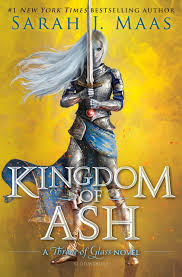 "Kingdom of Ash" is the seventh and final novel in Sarah J. Maas' popular "Throne of Glass" series, and it tells the story of Aelin and her friends as they embark in the final war against the dark forces that threatened them and their world. I won't go into much more detail, for it would get far too complex and take up the entire page just trying to explain each and every plotline.
Going into this, I was a little bit wary, as I liked A Court of War and Ruin—the only other novel we have from Maas that ended a series, but I found myself with lingering dissatisfaction when I thought of the novel. I wasn't sure how she would end this series, but I was unsure if she could do it well; everything seemed so scattered, too many loose ends flailing too far from one another, and her track record not incredible in my opinion.
To say I was pleasantly surprised is an understatement.
On the whole, I was very happy with this novel. Despite being nearly a whopping 1,000 pages, I didn't feel like I was drowning in pagecount while I read the novel, and between following Aelin's terrible journey in the hands of Maeve, to seeing reunions of characters who'd been long separated, to watching the epic final battle, I felt engrossed for the most of the time.
To keep it simple, I was satisfied with the loose ends Maas tied up, the ending a tear-jerker, though a bit dragged out if you ask me. A good chunk of the novel was dedicated to the final battle, which I really appreciated (particularly as a reader who has read too many novels that shove the climactic scenes into thirty pages and call it a day), and some of the revelations made in this novel tied back to details laid out early in the series, which I adored.
However, I think the truth of it is, Maas was juggling a few too many point of views and storylines. Though I think she did the best she could, and don't get me wrong, her writing was good in this novel, however we were split into so many points of view across so many parts of the world that I found myself confused or at times wondering about other characters. We had Aelin being locked away with Maeve and Rowan on his search through the continents to find her, Aedion and Lysandra fighting battles away from the rest of the characters, Yrene and Chaol sailing back from the Southern continent and then returning to Chaol's home, Dorian and the Thirteen hunting for the Crochan witches, and that is just a summary, leaving out a lot of other main characters who had perspectives in the same settings as some of the above listed. Any author, no matter how skilled, would have trouble juggling so many different settings and characters and storylines, and the thing I think I felt the most while reading this novel was wonder about the other character's whereabouts.
Though I loved the scene where they all met in the end, it felt tiring at times to switch to another point of view in another setting and try to remember what had been happening with them. There were times where I felt confused about who was where, or lacking backstory or depth to some of the short snippets we got. And those shortcomings are inevitable with any novel trying to deal with so many different storylines at once, however it was frustrating to get brief glimpses of Chaol and Yrene—who I had grown to love after "Tower of Dawn"—interspersed, or to get a random point of view from Lysandra that didn't seem to contribute too much, where I spent more time trying to remember where and who she and the army were fighting than I did paying attention to what was happening.
All of that being said, I do think the character arcs in this novel were done brilliantly, and I found myself barely resenting Aelin and Rowan, a big step up from where I left on in Empire of Storms. Their love felt more deep, their bond feeling realistic and mature in this novel, a big step outside of what they'd been in past installments. Watching Dorian grow as a character, develop a willingness to sacrifice himself for his people and his country, and grow into the King he was meant to be was a pleasure, and Maas wielded him beautifully. The scenes in Morath with him were perfect, just what I needed leading up to his reunion with the rest of the characters and the final battle.
Reading the scene where the Thirteen sacrifice themselves was absolutely heart-shattering, the description of the loss Manon felt after that and the pain that the whole army seemed to suffer in awe of their death was done so well I practically felt like I lost people myself.
There were so many moments of this novel that were beautiful, Maas flowery writing shining through with a couple lines that I know will stay with me for a long time.
And at its heart, this is a novel about dreamers, people willing to fight tooth and blood and sacrifice themselves for these dreams, for a world that was better than the one they'd been born into. And at its heart, I think I could never hate a book with those themes because they resonate so deeply with me.
To end this review, I'll leave you with a quote that embodies what I just described.
"There's a better world out there, and I have seen it."
Depth: 85%
Style: 90%
Intrigue: 95%
Overall Rating: B+
"Kingdom of Ash" is the seventh and final novel in Sarah J. Maas' popular "Throne of Glass" series, and it tells the story of Aelin and her friends as they embark in the final war against the dark forces that threatened them and their world. I won't go into much more detail, for it would get far too complex and take up the entire page just trying to explain each and every plotline.Going into this, I was a little bit wary, as I liked A Court of War and Ruin—the only other novel we have from Maas that ended a series, but I found myself with lingering dissatisfaction when I thought of the novel. I wasn't sure how she would end this series, but I was unsure if she could do it well; everything seemed so scattered, too many loose ends flailing too far from one another, and her track record not incredible in my opinion.
To say I was pleasantly surprised is an understatement.
On the whole, I was very happy with this novel. Despite being nearly a whopping 1,000 pages, I didn't feel like I was drowning in pagecount while I read the novel, and between following Aelin's terrible journey in the hands of Maeve, to seeing reunions of characters who'd been long separated, to watching the epic final battle, I felt engrossed for the most of the time.
To keep it simple, I was satisfied with the loose ends Maas tied up, the ending a tear-jerker, though a bit dragged out if you ask me. A good chunk of the novel was dedicated to the final battle, which I really appreciated (particularly as a reader who has read too many novels that shove the climactic scenes into thirty pages and call it a day), and some of the revelations made in this novel tied back to details laid out early in the series, which I adored.
However, I think the truth of it is, Maas was juggling a few too many point of views and storylines. Though I think she did the best she could, and don't get me wrong, her writing was good in this novel, however we were split into so many points of view across so many parts of the world that I found myself confused or at times wondering about other characters. We had Aelin being locked away with Maeve and Rowan on his search through the continents to find her, Aedion and Lysandra fighting battles away from the rest of the characters, Yrene and Chaol sailing back from the Southern continent and then returning to Chaol's home, Dorian and the Thirteen hunting for the Crochan witches, and that is just a summary, leaving out a lot of other main characters who had perspectives in the same settings as some of the above listed. Any author, no matter how skilled, would have trouble juggling so many different settings and characters and storylines, and the thing I think I felt the most while reading this novel was wonder about the other character's whereabouts.
Though I loved the scene where they all met in the end, it felt tiring at times to switch to another point of view in another setting and try to remember what had been happening with them. There were times where I felt confused about who was where, or lacking backstory or depth to some of the short snippets we got. And those shortcomings are inevitable with any novel trying to deal with so many different storylines at once, however it was frustrating to get brief glimpses of Chaol and Yrene—who I had grown to love after "Tower of Dawn"—interspersed, or to get a random point of view from Lysandra that didn't seem to contribute too much, where I spent more time trying to remember where and who she and the army were fighting than I did paying attention to what was happening.
All of that being said, I do think the character arcs in this novel were done brilliantly, and I found myself barely resenting Aelin and Rowan, a big step up from where I left on in Empire of Storms. Their love felt more deep, their bond feeling realistic and mature in this novel, a big step outside of what they'd been in past installments. Watching Dorian grow as a character, develop a willingness to sacrifice himself for his people and his country, and grow into the King he was meant to be was a pleasure, and Maas wielded him beautifully. The scenes in Morath with him were perfect, just what I needed leading up to his reunion with the rest of the characters and the final battle.
Reading the scene where the Thirteen sacrifice themselves was absolutely heart-shattering, the description of the loss Manon felt after that and the pain that the whole army seemed to suffer in awe of their death was done so well I practically felt like I lost people myself.
There were so many moments of this novel that were beautiful, Maas flowery writing shining through with a couple lines that I know will stay with me for a long time.
And at its heart, this is a novel about dreamers, people willing to fight tooth and blood and sacrifice themselves for these dreams, for a world that was better than the one they'd been born into. And at its heart, I think I could never hate a book with those themes because they resonate so deeply with me.
To end this review, I'll leave you with a quote that embodies what I just described.
"There's a better world out there, and I have seen it."
~~
Characters: 85%
Plot: 90%Depth: 85%
Style: 90%
Intrigue: 95%
Overall Rating: B+
Sunday, December 16, 2018
Why I Love NaNoWriMo
As November drew to a close, I got thinking on the idea of NaNoWriMo—the very popular organization that facilitates writing a novel (50,000 words) in a month.
It takes the literary world by storm, thousands and thousands of authors, some published, others teens trying their hand at novels for the very first time, sitting down to work on their NaNo novel. And amidst all of the buzz, I found myself reflecting on it.
I've been participating in NaNo for years now, and every time November begins, I giddily plan and write until my wrists ache.
However, I'm going to let you in on a little secret: I almost never win. I've had years where I rocket through the word count in the first three weeks, but most of the time, I don't even reach the 50,000 words. So why do I do it, year after year, knowing I likely will get busy and fall short of the word count?
There are a few reasons:
First and foremost, it is a prompt to write. Even if you won't get to the 50,000 words, even if you barely write 2,000 that month, it gets your creative juices flowing, lets ideas begin marinating, and forces you to sit down at your computer and at least try.
And in my experience with writing, that is almost 80% of the process. Once you're on that creative wave, once you have the words flowing, the rest is easy. And having something to get you over that hurdle, something that gives you a specific reason to write, is incredibly helpful in getting those words going.
Many of my favorite pieces have come out of NaNo projects that, though bad when I first wrote them one cold November night, had kernels in them that were golden and spawned a beautiful story.
Second, a community of writers come together for NaNo in ways they rarely do other times. When you're doing NaNo, you're doing what writers across the world are doing, and the energy that comes from that, the community that is raised, is a feeling that will get you motivated and inspired unlike anything else in my experience.
To have that scaffolding, that backing of writers who are doing what you are and want you to succeed just as bad as you do is unique and something to be treasured. It's rare in an industry like ours to find so much love and support, and getting to see that has been fulfilling in ways I never expected it to.
Third, it reminds me how to be creative. I know, it sounds dumb, seeing as I write consistently, but as writers, we can become pageblind; we can forget the process, forget how organic it is, and fall into the syntax and the characters of the one idea we are working with. It's easy to lose inspiration and to stop mining for ideas, and NaNo helps me get out of that.
In October of every year, when I know it's time to start planning for my November novel, having to dig up ideas, draw on the events of the past year of my life for inspiration, and piece together a new story so quickly, I remember what it is to be creative; I remember that creative high. And during NaNo, if you hit a hitch in your novel, you must work around the issue to finish on time, rather than put off that plot issue or character fault. Working so quickly, being forced to confront these things, reminds me how to be creative, and it consistently re-teaches me why I love what I do so much.
So despite the fact that I know I likely won't win, every year when November rolls around, I sit down begin writing my NaNo novel, because even if what I produce is messy and unfinished and beneath the word count, it's something, and the experience every time makes it beyond worth it.
It takes the literary world by storm, thousands and thousands of authors, some published, others teens trying their hand at novels for the very first time, sitting down to work on their NaNo novel. And amidst all of the buzz, I found myself reflecting on it.
I've been participating in NaNo for years now, and every time November begins, I giddily plan and write until my wrists ache.
However, I'm going to let you in on a little secret: I almost never win. I've had years where I rocket through the word count in the first three weeks, but most of the time, I don't even reach the 50,000 words. So why do I do it, year after year, knowing I likely will get busy and fall short of the word count?
There are a few reasons:
First and foremost, it is a prompt to write. Even if you won't get to the 50,000 words, even if you barely write 2,000 that month, it gets your creative juices flowing, lets ideas begin marinating, and forces you to sit down at your computer and at least try.
And in my experience with writing, that is almost 80% of the process. Once you're on that creative wave, once you have the words flowing, the rest is easy. And having something to get you over that hurdle, something that gives you a specific reason to write, is incredibly helpful in getting those words going.
Many of my favorite pieces have come out of NaNo projects that, though bad when I first wrote them one cold November night, had kernels in them that were golden and spawned a beautiful story.
Second, a community of writers come together for NaNo in ways they rarely do other times. When you're doing NaNo, you're doing what writers across the world are doing, and the energy that comes from that, the community that is raised, is a feeling that will get you motivated and inspired unlike anything else in my experience.
To have that scaffolding, that backing of writers who are doing what you are and want you to succeed just as bad as you do is unique and something to be treasured. It's rare in an industry like ours to find so much love and support, and getting to see that has been fulfilling in ways I never expected it to.
Third, it reminds me how to be creative. I know, it sounds dumb, seeing as I write consistently, but as writers, we can become pageblind; we can forget the process, forget how organic it is, and fall into the syntax and the characters of the one idea we are working with. It's easy to lose inspiration and to stop mining for ideas, and NaNo helps me get out of that.
In October of every year, when I know it's time to start planning for my November novel, having to dig up ideas, draw on the events of the past year of my life for inspiration, and piece together a new story so quickly, I remember what it is to be creative; I remember that creative high. And during NaNo, if you hit a hitch in your novel, you must work around the issue to finish on time, rather than put off that plot issue or character fault. Working so quickly, being forced to confront these things, reminds me how to be creative, and it consistently re-teaches me why I love what I do so much.
So despite the fact that I know I likely won't win, every year when November rolls around, I sit down begin writing my NaNo novel, because even if what I produce is messy and unfinished and beneath the word count, it's something, and the experience every time makes it beyond worth it.
Monday, October 22, 2018
The Power of Words
As someone who spends a lot of their time immersed in the world of words, sometimes I lose a grip on why I love it so much. It's not that I lose hope in words, or that I fall out of love with language, it's that I become so blind to what I'm doing and so exhausted from constant work, that sometimes I forget about the spark that ignites in me whenever I read or write.
Now, from being in this community for a long time, I know that's not particularly uncommon. And frankly, we all need breaks from things we do a lot, even if we love them. Hence reading slumps, writer's block, etc. But sometimes, after long months of being uninspired, in rare moments when the cosmos seem to bleed together and brew the perfect moment, you're reminded just of why words are so powerful.
For me this happened a few weeks ago. It was a grey day, the first chill of autumn creeping into the air. I'd been slowly chugging my way through "Big Magic" by Elizabeth Gilbert, and on this day I was possessed by an inexplicable desire to devour it. So I sat down in a free hour I had and sped through the ending of the book. Upon finishing it, my eyes were wide, my heart was pounding, and every thought of mine was refocused back to writing.
It had been a long time since I'd been so inspired. Her writing is beautiful, of course, and her metaphors are masterful, but she also has that magic that she writes about. Her words carry with them a preternatural ability to move you, to get you out of your worries and fears and onto the computer to get writing, or acting, or whatever it is you love and want to pursue.
As she urged the reader, "So please calm down now and get back to work, okay? The treasures that are hidden inside you are hoping you will say yes," I felt electric, like I'd been struck with the brilliance and the magic of the world upon which us writers and readers operate.
But I couldn't sit and stew on this moment. I couldn't revel in the energy that coursed through me, or jump on the train of adrenaline that was making my fingers itch to write. I'd bought tickets to see Porsha Olayiwola perform "Black and Ugly As Ever," and it was time for me to leave.
So, still radiating the creativity that Gilbert had instilled, I hopped on the train and shot over to see Olayiwola's performance. And needless to say, it was incredible. As she whisked us through her life, her experiences, and the flaws in our culture, I felt that energy in me heightening. It didn't fizzle, or drain out as sometimes happens when you let it sit. Instead, it grew, multiplying and spawning something I hadn't felt in a long time.
As Olayiwola stood before a crammed club and bellowed, "I'm so black I'm not alive, just not buried yet" and "Every time I twirled my afro out, I knew I was some kind of rebellion," I felt the energy in the room crackling.
My world was flowing and ebbing, the fibers of my brain coming undone and forging themselves anew. See, it is rare moments like that where the power of words becomes so apparent, so intense that it overwhelms you, that it seems to beat in every breath in the sweaty room, seems to twine with the stars and sing in the streets. It is not every day that you feel so intensely, so powerfully about how much words mean and the command they hold. Experiences like those are fleeting, blessings in a way. And I couldn't be more grateful.
You see, I was in a slump, dawdling in an unmotivated state. I hadn't written in weeks, I was barely getting through novels. I felt like I was drowning in work, and the world was starting to look more and more bland.
But words are more powerful than that. They are sometimes wretched and cruel, but they are powerful. And when you need them most, they sweep through and remind you just why you love them so much.
So if you are in the position I was in just a few weeks ago—feeling uninspired, not good enough, lost, or dazed—then let this be my beckon to you. Re-immerse yourself in the world of words. Don't give up, don't lose yourself now.
Keep chipping away at that novel you're reading, write a little bit every day, even if you have to gut the words out of yourself. Because I promise, you'll get your moment as well. You won't be uninspired forever.
As long as you keep trying, inspiration will strike again, and you'll remember awe-inspiring power of words for whatever reason it was.
And once they do, you'll be unstoppable.
Now, from being in this community for a long time, I know that's not particularly uncommon. And frankly, we all need breaks from things we do a lot, even if we love them. Hence reading slumps, writer's block, etc. But sometimes, after long months of being uninspired, in rare moments when the cosmos seem to bleed together and brew the perfect moment, you're reminded just of why words are so powerful.
For me this happened a few weeks ago. It was a grey day, the first chill of autumn creeping into the air. I'd been slowly chugging my way through "Big Magic" by Elizabeth Gilbert, and on this day I was possessed by an inexplicable desire to devour it. So I sat down in a free hour I had and sped through the ending of the book. Upon finishing it, my eyes were wide, my heart was pounding, and every thought of mine was refocused back to writing.
It had been a long time since I'd been so inspired. Her writing is beautiful, of course, and her metaphors are masterful, but she also has that magic that she writes about. Her words carry with them a preternatural ability to move you, to get you out of your worries and fears and onto the computer to get writing, or acting, or whatever it is you love and want to pursue.
As she urged the reader, "So please calm down now and get back to work, okay? The treasures that are hidden inside you are hoping you will say yes," I felt electric, like I'd been struck with the brilliance and the magic of the world upon which us writers and readers operate.
But I couldn't sit and stew on this moment. I couldn't revel in the energy that coursed through me, or jump on the train of adrenaline that was making my fingers itch to write. I'd bought tickets to see Porsha Olayiwola perform "Black and Ugly As Ever," and it was time for me to leave.
So, still radiating the creativity that Gilbert had instilled, I hopped on the train and shot over to see Olayiwola's performance. And needless to say, it was incredible. As she whisked us through her life, her experiences, and the flaws in our culture, I felt that energy in me heightening. It didn't fizzle, or drain out as sometimes happens when you let it sit. Instead, it grew, multiplying and spawning something I hadn't felt in a long time.
As Olayiwola stood before a crammed club and bellowed, "I'm so black I'm not alive, just not buried yet" and "Every time I twirled my afro out, I knew I was some kind of rebellion," I felt the energy in the room crackling.
My world was flowing and ebbing, the fibers of my brain coming undone and forging themselves anew. See, it is rare moments like that where the power of words becomes so apparent, so intense that it overwhelms you, that it seems to beat in every breath in the sweaty room, seems to twine with the stars and sing in the streets. It is not every day that you feel so intensely, so powerfully about how much words mean and the command they hold. Experiences like those are fleeting, blessings in a way. And I couldn't be more grateful.
You see, I was in a slump, dawdling in an unmotivated state. I hadn't written in weeks, I was barely getting through novels. I felt like I was drowning in work, and the world was starting to look more and more bland.
But words are more powerful than that. They are sometimes wretched and cruel, but they are powerful. And when you need them most, they sweep through and remind you just why you love them so much.
So if you are in the position I was in just a few weeks ago—feeling uninspired, not good enough, lost, or dazed—then let this be my beckon to you. Re-immerse yourself in the world of words. Don't give up, don't lose yourself now.
Keep chipping away at that novel you're reading, write a little bit every day, even if you have to gut the words out of yourself. Because I promise, you'll get your moment as well. You won't be uninspired forever.
As long as you keep trying, inspiration will strike again, and you'll remember awe-inspiring power of words for whatever reason it was.
And once they do, you'll be unstoppable.
Subscribe to:
Posts (Atom)